


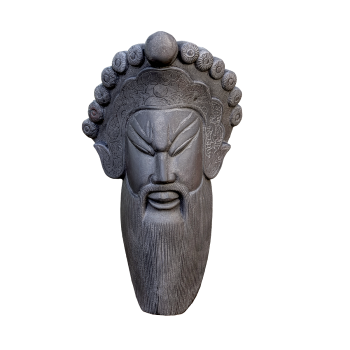
Guan Yu - Dark Wood Carving
Guan Yu, also known as Yunchang, was a famous military commander in the late Eastern Han Dynasty of China and one of the important figures of Shu Han during the Three Kingdoms period. He is known for his bravery, loyalty, and loyalty, and is revered as the "Martial Saint" by later generations. In his early years, he rose up with Liu Bei and participated in the suppression of the Yellow Turban Uprising. In the subsequent warlords' conquests, he became brothers with Liu Bei and Zhang Fei and experienced countless battles together. Throughout history, the imperial court has repeatedly posthumously conferred upon him the title of "Guansheng Emperor". The gloomy wooden carving work with the theme of Peach Blossom Oath was created by Chinese arts and crafts master Liang Fengzhu in 2019. The work is now collected at the Liang Fengzhu Arts and Crafts Museum in Nanyue, Hengyang, China.

Qing Dynasty gilded bronze statue of Guan Yu riding on horseback
Guan Yu (160-219 AD), also known as Yunchang, was an important general and historical figure of Shu Han during the Three Kingdoms period in China. He is a trusted aide and deputy general of Liu Bei, as well as a legendary figure in Liu Bei's clothing token "Scratching Bones for Healing". Standing at seven feet and five inches in length, with a beautiful and majestic beard, and high martial arts skills. He made significant military achievements for Liu Bei in the Battle of Red Cliffs and was awarded the title of "Marquis of Wu", becoming an important assistant and protector of Liu Bei. He is known for his loyalty and bravery, and is revered as the "Martial Saint" by people. Known as' Guan Gong 'by later generations and widely worshipped. The spirit and story of Guan Yu are widely praised in Chinese culture and have become legendary figures in history.

Guan Yu Woodcarving
Guan Yu is revered as a symbol of loyalty and righteousness. As one of the most famous Chinese historical figures in East Asia, his true stories have been largely replaced by fictional stories, most of which appear in the 14th century historical novel "Romance of the Three Kingdoms" or are passed down from generation to generation. His deeds and moral qualities are highly praised in the novel.

Statue of Guan Yu
Guan Yu (? -220 AD [125]), also known as Yunchang and Changsheng, was born in Jiexian County, Hedong Commandery (now Jiezhou Town, Yanhu District, Yuncheng City, Shanxi Province). A famous general in the late Eastern Han Dynasty.

Portrait of Guan Yu Riding a Horse
A famous general in the late Eastern Han Dynasty. Guan Yu treated soldiers well and despised literati, and was known for his loyalty and righteousness in later generations. After his death, he was revered as "Guan Gong" by the people and was often honored by the imperial courts throughout history. During the reign of Emperor Yongzheng of the Qing Dynasty, he was revered as the "Martial Saint" and held the same status as Confucius, the "Literary Saint". In the novel "Romance of the Three Kingdoms", he is ranked first among the "Five Tiger Generals" and uses the Green Dragon Crescent Blade. Mao Zonggang referred to it as the "Yijue" in the "Three Wonders" of "Romance of the Grand Historian". In terms of religious culture, Confucianism regards him as Emperor Wenheng [120], Buddhism regards him as "Guardian Galan Bodhisattva" and "Gaitian Ancient Buddha", Taoism regards him as "Emperor Xietian" and "Xianghan Heavenly God", etc.

Woodcarving of Guan Yu, the figure of the Three Kingdoms
Guan Yu, also known as Yunchang, was a famous general of the Shu Kingdom at the end of the Han Dynasty. He was the adopted brother of Liu Bei and one of the highly respected heroic figures in Chinese history. He played an important role in the late Eastern Han Dynasty and the Three Kingdoms period. A tall and imposing figure is revered as' Guan Gong '. He is known for his loyalty, integrity, and bravery, and is the backbone of Liu Bei's power. Guan Yu was born in Jie County, Hedong Commandery. In his early years, he held positions in the government and became sworn brothers with Liu Bei. He demonstrated outstanding martial arts and military talent in many battles, especially winning reputation for defeating the great general Xiahou Dun of Cao Cao. His image has been widely praised by later generations and has become a symbol of loyalty and bravery

Brass statue of Guan Yu riding on horseback
Guan Yu (160-219 AD), also known as Yunchang, was an important general and historical figure of Shu Han during the Three Kingdoms period in China. He is a trusted aide and deputy general of Liu Bei, as well as a legendary figure in Liu Bei's clothing token "Scratching Bones for Healing". Standing at seven feet and five inches in length, with a beautiful and majestic beard, and high martial arts skills. He made significant military achievements for Liu Bei in the Battle of Red Cliffs and was awarded the title of "Marquis of Wu", becoming an important assistant and protector of Liu Bei. He is known for his loyalty and bravery, and is revered as the "Martial Saint" by people. Known as' Guan Gong 'by later generations and widely worshipped. The spirit and story of Guan Yu are widely praised in Chinese culture and have become legendary figures in history.

Bronze Statue Garrison - Black Jade Statue of Emperor Guan Gong
Guan Yu (160-220 AD), also known as Yunchang and Changsheng, was born in Jiexian County, Hedong Commandery (now Jiezhou Town, Yanhu District, Yuncheng City, Shanxi Province). A famous general in the late Eastern Han Dynasty. Guan Yu treated soldiers well and despised literati, and was known for his loyalty and righteousness in later generations. After his death, he was revered as "Guan Gong" by the people and was often honored by the imperial courts throughout history. During the reign of Emperor Yongzheng of the Qing Dynasty, he was revered as the "Martial Saint" and held the same status as Confucius, the "Literary Saint". In the novel 'Romance of the Three Kingdoms', he is ranked first among the' Five Tiger Generals'. In the regions of Hong Kong, Macau, Taiwan, and some Southeast Asian countries, almost every household worships the statue of Guan Gong, who is worshipped by Confucius in literature and Guan Gong in martial arts.

Statue of Guan Yu
Guan Yu (160-220 AD) was a famous general during the Han Dynasty (206 BC-220 AD) and one of the most famous historical figures in ancient Chinese history. Guan Yu is also revered as the "Martial Saint", commonly known as "Lord Guan", "Second Lord Guan" or "Guan Gong". Later generations deified him and respectfully referred to him as' Emperor Guan '.

The Romance of the Three Kingdoms Brass Statue of Wusheng Guan Yunchang Guan Yu
Guan Yu (?-220), the word cloud long, the word Changsheng, Hedong County (now Shanxi Yuncheng City, Yanhu District, Jiezhou Town) people. The end of the Eastern Han Dynasty famous. Guan Yu was kind to soldiers and despised scholar-officials, and was known for his loyalty to future generations. After his death, the people revered him as "Guan Gong", and many of the previous dynasties had praised him. During the Yongzheng period of the Qing Dynasty, he was revered as a "martial saint", which was equivalent to the status of Confucius as a "Wen Sheng. In the novel "Romance of the Three Kingdoms", it ranks first among the "Five Tiger Generals" and uses the dragon crescent moon sword.

Popular Models

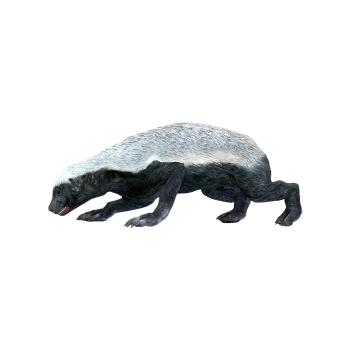
Honey Badger (3D animated model)
194 View
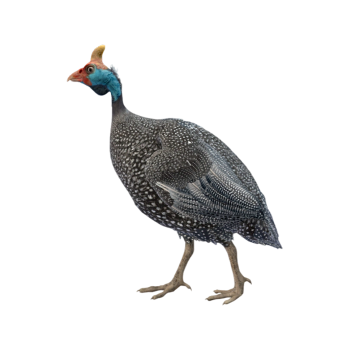
Guinea fowl (3D animated model)
165 View
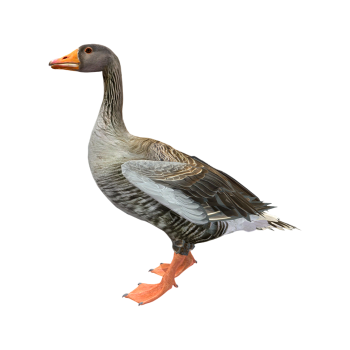
Wild Goose (3D animated model)
187 View

Red Fox (3D animated model)
155 View
Random Model

Gas bottle
553 View

Solid wood rocking chair
501 View

traditional antique style oak table
516 View

Concrete Barricade
435 View

Crocodile flounder specimen
462 View

Sofa bed
514 View

red electric kettle
470 View

plastic chair
462 View

Deinonychus (3D animation model)
146 View

Skull of roe deer
729 View